
Artificial intelligence is reshaping the way we experience the internet, and ChatGPT Atlas stands at the center of this transformation. Developed by OpenAI, ChatGPT Atlas is not just another browser. It’s an intelligent interface that blends web exploration with real-time AI assistance.
This marks a major step toward a new kind of web experience, where users
- interact,
- learn,
- and take action through an AI that understands context and intent.
👉 Download ChatGPT Atlas (macOS version): https://chat.openai.com/atlas ⭷
🧠 What Is ChatGPT Atlas?
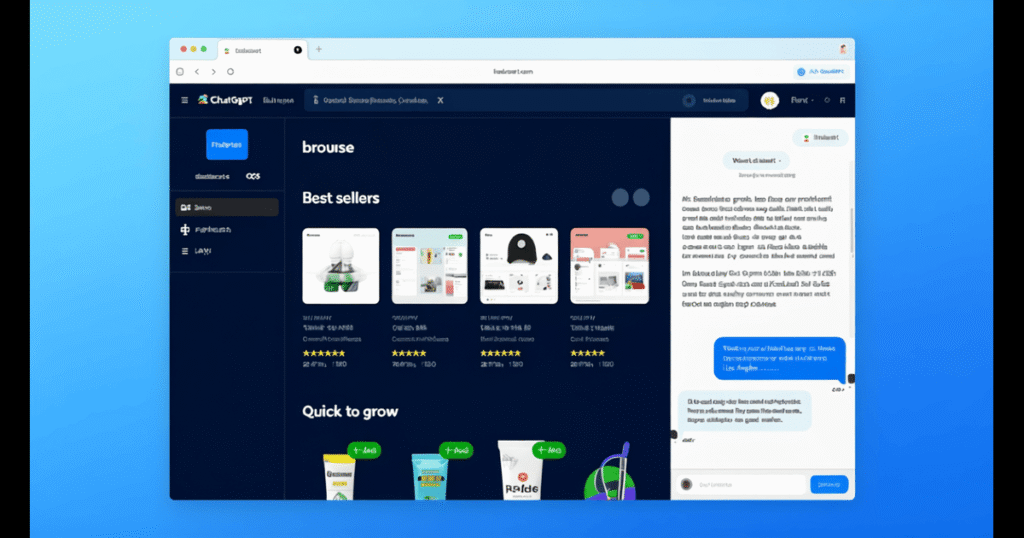
ChatGPT Atlas is OpenAI’s newly launched AI-powered web browser, built on Chromium and deeply integrated with the ChatGPT assistant. It allows users to browse the internet while interacting naturally with ChatGPT in a sidebar. You can ask it to summarise an article, compare products, find key information, or even complete online actions like filling forms or clicking links — all directly within the browser.
Initially available for macOS (Apple Silicon / macOS 12 Monterey or later), OpenAI has announced that Windows, iOS, and Android versions are coming soon. This makes ChatGPT Atlas a major contender in the growing space of AI browsers designed to make web experiences faster, smarter, and more personalized.
⚙️ Key Features of ChatGPT Atlas
- Agent Mode – Lets ChatGPT take intelligent actions on your behalf, such as opening tabs, filling forms, or performing research tasks.
- AI Sidebar – Ask questions about any webpage: “Summarize this article,” “Compare this product,” or “Explain this data.”
- Browser Memory – Allows ChatGPT to remember details, preferences, or key insights over time for more personalized responses.
- Privacy and Control – Users can manage what the browser remembers and opt out of data sharing or AI memory entirely.
- Familiar Design – Built on Chromium, Atlas supports standard browser features like bookmarks, imports, and extensions.
🚀 Why ChatGPT Atlas Matters for AI Trends
The release of ChatGPT Atlas highlights one of today’s most significant AI trends. And also It’s a movement from passive digital tools to active AI collaborators. And this allows users to engage with a browser that understands their intent and assists in achieving goals more efficiently, Instead of relying solely on manual searches,.
This evolution mirrors what’s happening across industries, As AI is becoming embedded into everyday interfaces, from writing assistants to voice-driven apps, and now intelligent browsers.
So the next generation of software will be centered on contextual understanding and action-based intelligence.
🔍 Opportunities and Challenges
Like any emerging technology, ChatGPT Atlas presents both exciting opportunities and important considerations:
Opportunities:
- Boosts productivity by automating repetitive online tasks.
- Enhances learning and research through real-time summarization and analysis.
- Enables smarter decision-making with contextual insights.
Challenges:
- Raises privacy concerns regarding browser memory and AI data usage.
- Requires strong user trust in AI-driven automation.
- Limited availability (currently macOS only).
OpenAI provides transparency by allowing users to control data retention and memory features, ensuring a balance between personalization and privacy.
🔮 The Future of AI-Driven Browsing
The launch of ChatGPT Atlas signals the beginning of a new phase in AI-assisted computing. And future browsers will no longer act merely as windows to the web, instead they will function as intelligent partners that think, act, and learn alongside users.
For developers and tech innovators, this shift opens a vast new space for creativity:
- integrating AI into everyday tools
- building smarter web experiences
- and creating personalized digital environments that evolve over time.
As OpenAI continues to expand Atlas across platforms, it becomes more clear that the future of browsing is not just about search, instead it’s about collaboration between humans and AI.






Leave a Reply