
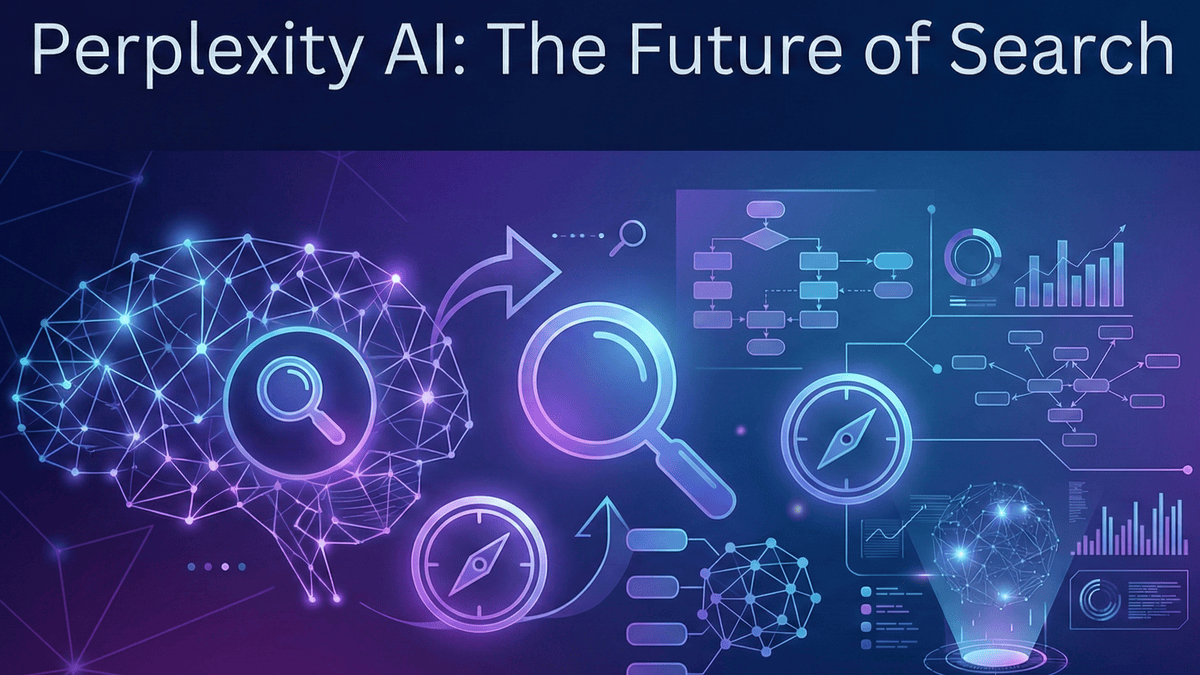
An in-depth look at how Perplexity challenges Google, transforms online research, and sets the new standard for AI-powered search.
For more than two decades, Google has been the gateway to information online — shaping how billions discover answers, learn new things, and explore the web. But in the last few years, the rise of AI search engines has reshaped how people expect information to be delivered. Among all the new AI tools, one platform stands out for its accuracy, transparency, and research-first approach: Perplexity AI.
Perplexity isn’t just a chatbot. It isn’t just another large language model. It is an AI answer engine designed to provide clear, sourced, and up-to-date information instantly — without ads, clutter, or SEO noise. As more users grow frustrated with traditional search results packed with ads, low-quality pages, and manual filtering, Perplexity has become a refreshing alternative.
In this deep-dive article, we explore what Perplexity is, how it works, why it’s gaining momentum so quickly, and how it compares to Google — the world’s most dominant search engine.
What Is Perplexity AI?
Perplexity AI is an AI-powered search engine and research assistant that combines real-time web browsing with advanced language models. Unlike traditional search engines that show lists of links, Perplexity gives users direct answers — complete with citations, context, and follow-up explanations.
At its core, Perplexity is built to solve a modern problem:
“The internet has plenty of information, but finding the right information has become harder.”
With Perplexity, users don’t need to sift through ads, skip sponsored links, or open 10 tabs. The AI does the searching, analyzing, summarizing, and citing — all in one place.
Why Perplexity Is More Than a Chatbot
While tools like ChatGPT, Claude, and Gemini are primarily conversational AI assistants, Perplexity operates differently:
1. Real-Time Web Search
Perplexity pulls live data from the internet, ensuring responses are current — something traditional AI models struggle with.
2. Structured, Cited Answers
Every answer includes sources, giving users confidence and allowing deeper research.
3. Zero Ads
Unlike Google, Perplexity offers ad-free search, keeping results clean and objective.
4. Conversational Research
Perplexity lets users refine queries naturally, creating a smooth research workflow.
5. Deep Research Mode
The platform offers a specialized mode for complex topics, producing structured reports with extended citations, analysis, and summaries.
These capabilities position Perplexity as an AI research engine, not just a conversational assistant.
The Problem With Traditional Search — and How Perplexity Solves It
Before understanding why Perplexity is rising so quickly, we must understand what’s broken in the traditional search model.
The modern search experience is cluttered.
Over time, search engines optimized for ads, not answers. Users today face:
- SEO-stuffed pages
- Multiple ads before real results
- Affiliate-driven review sites
- Clickbait articles
- Content duplication
Instead of direct answers, users get walls of content designed to rank — not to solve their query.
Perplexity’s Answer Engine approach solves this by:
✔ Removing ads
✔ Eliminating low-quality SEO content
✔ Providing citations upfront
✔ Summarizing only the most reliable sources
✔ Structuring information in a digestible format
In short: Perplexity does the heavy lifting so users don’t have to.
How Perplexity AI Works — Behind the Scenes
Perplexity blends three core technologies:
1. Large Language Models (LLMs)
These models understand natural language and generate clear responses.
2. Web Crawling & Live Search
Perplexity actively browses the web like a search engine, pulling new data at the moment of the query.
3. Advanced Reasoning & Summarization
The AI analyzes multiple sources, compares information, filters noise, and produces a distilled, factual answer.
This hybrid architecture makes Perplexity more accurate than standalone LLMs and more efficient than traditional search engines.
Perplexity vs Google: A Detailed Comparison
Perplexity is often compared to Google because both aim to help people find information online. But their methods — and user experiences — are completely different.
Here’s a breakdown:
1. Search Results
- Google: Provides links, ads, sponsored posts, knowledge panels.
- Perplexity: Provides direct answers with citations.
2. Ads & Monetization
- Google: Ad-driven model (majority of results contain ads).
- Perplexity: No ads, subscription-based Pro model.
3. Research Efficiency
- Google: Requires manual filtering through pages.
- Perplexity: Filters for you, offering clean summaries.
4. Real-Time Information
- Google: Crawls the web regularly but does not summarize real-time content.
- Perplexity: Actively fetches and summarizes information during your query.
5. Follow-Up Questions
- Google: Requires new searches.
- Perplexity: You can continue the conversation naturally.
6. User Intent Understanding
- Google: Attempts to infer intent but still returns link lists.
- Perplexity: Understands intent and refines its answer based on context.
Verdict: Perplexity is better for research. Google is better for general browsing.
Users often describe it this way:
Google helps you find websites. Perplexity helps you find answers.
Why Perplexity Is Gaining Popularity
Beyond its technical advantages, Perplexity is benefiting from a massive shift in user behavior:
1. People want instant, reliable answers
Users no longer want to skim long articles or click through multiple pages.
2. Trust matters more than ever
Citations make Perplexity’s responses feel transparent and credible.
3. AI search is the future
As AI becomes more common, people expect personalized, conversational results — not just lists of links.
4. Professionals love accuracy
Researchers, writers, students, analysts, and developers increasingly use Perplexity because it saves time and improves accuracy.
5. The clean interface is refreshing
Many users switch to Perplexity simply because it feels less stressful than Google.
Use Cases: What People Use Perplexity For
Perplexity supports a wide range of real-world uses:
1. Research & Learning
Perfect for students, journalists, and content creators.
2. Fact-Checking
Ideal for verifying claims with real-time sources.
3. Technical Problem Solving
Great for developers, data analysts, and engineers.
4. Travel Planning
Itinerary suggestions, comparisons, and up-to-date travel rules.
5. Product Comparisons
Real-time reviews, pros and cons, pricing data, and benchmarks.
6. Business Intelligence
Summaries of market trends, company reports, and industry insights.
Perplexity handles tasks that traditionally required dozens of tabs — in one place.
Is Perplexity a Google Killer?
This question appears everywhere: “Will Perplexity replace Google?”
The answer is nuanced.
Perplexity will not replace Google as the main web index.
Google is still the backbone of the open web and a powerful browsing tool.
But Perplexity will replace Google for research tasks.
In areas like:
- Learning new topics
- Fact-checking
- Technical explanations
- Trend analysis
- Comparisons
- Summaries
Users are already shifting away from Google toward AI search engines.
This is the same pattern that happened with:
- Maps vs Paper Maps
- Spotify vs Radio
- Netflix vs Cable TV
New technology doesn’t replace everything — but it reshapes usage patterns.
The Future of Search: Why AI Search Engines Will Dominate
Perplexity represents an important shift: the move from search engines to answer engines.
Users of the future won’t want:
❌ pages full of links
❌ SEO-driven spam
❌ paid placements
❌ repetitive manual searching
They will expect:
✔ trusted answers
✔ transparent citations
✔ context-aware results
✔ real-time information
✔ conversational exploration
AI search engines like Perplexity are perfectly positioned to lead this transformation.
Perplexity’s Limitations
To be balanced, it’s important to address limitations:
- It may summarize sources imperfectly.
- It still depends on the quality of sources.
- It sometimes misses niche or hyper-specific information.
- It requires an internet connection for accuracy.
- It cannot always replicate the discovery aspect of browsing.
Still, these limitations do not overshadow its strengths — especially for structured research.
Final Thoughts: Perplexity Is the Start of a New Search Era
Perplexity AI represents a major shift in how we discover information online. Instead of scrolling through ads and links, users receive clear, concise, and cited answers powered by real-time web intelligence.
The future of search is:
- Faster
- Smarter
- More accurate
- More personalized
- More transparent
And Perplexity is at the front of that evolution.
Whether you’re comparing Perplexity vs Google, exploring AI search engines, or simply looking for a better way to research — Perplexity shows what the next era of the internet will look like.





Leave a Reply