

A Practical AI Comparison for Research, Productivity, and Everyday Use in 2025
Artificial intelligence tools are no longer optional productivity enhancers. They have quietly become daily companions for writing, research, development, learning, and decision-making. Among the most widely discussed platforms today are Google Gemini, ChatGPT, and Perplexity AI. Each tool approaches intelligence from a different angle. Because of that, choosing the “best” option depends less on hype and more on real-world use cases.
This comparison was written to clarify those differences. Rather than focusing on marketing claims, it explains how each tool behaves in practice, what it does well, and where its limitations appear. By the end of this guide, creators, developers, students, and product teams should have a clearer framework for choosing the right AI assistant in 2025.
The Rise of Purpose-Driven AI Tools
At first, conversational AI was positioned as a single solution for everything. That idea has slowly faded. Instead, platforms are now being optimized around specific workflows. Some focus on creativity and conversation. Others emphasize research accuracy. Meanwhile, ecosystem integration has become a major differentiator.
Gemini, ChatGPT, and Perplexity represent this shift clearly. They do not compete on the same axis. Instead, they occupy overlapping but distinct spaces within the AI landscape.
Overview of the Three Platforms
Before diving deeper, it helps to understand the core positioning of each tool.
Google Gemini
Gemini is Google’s flagship AI model, designed to work seamlessly across Google products. It is tightly integrated with Search, Docs, Gmail, Sheets, and other Workspace tools. Because of this, it is often positioned as an AI layer over the web itself.
Official site:
https://gemini.google.com
ChatGPT
ChatGPT, developed by OpenAI, is best known for conversational intelligence and creative output. It excels at reasoning, structured writing, coding assistance, and idea generation. It is often used as a thinking partner rather than a search engine.
Official site:
https://chat.openai.com
Perplexity AI
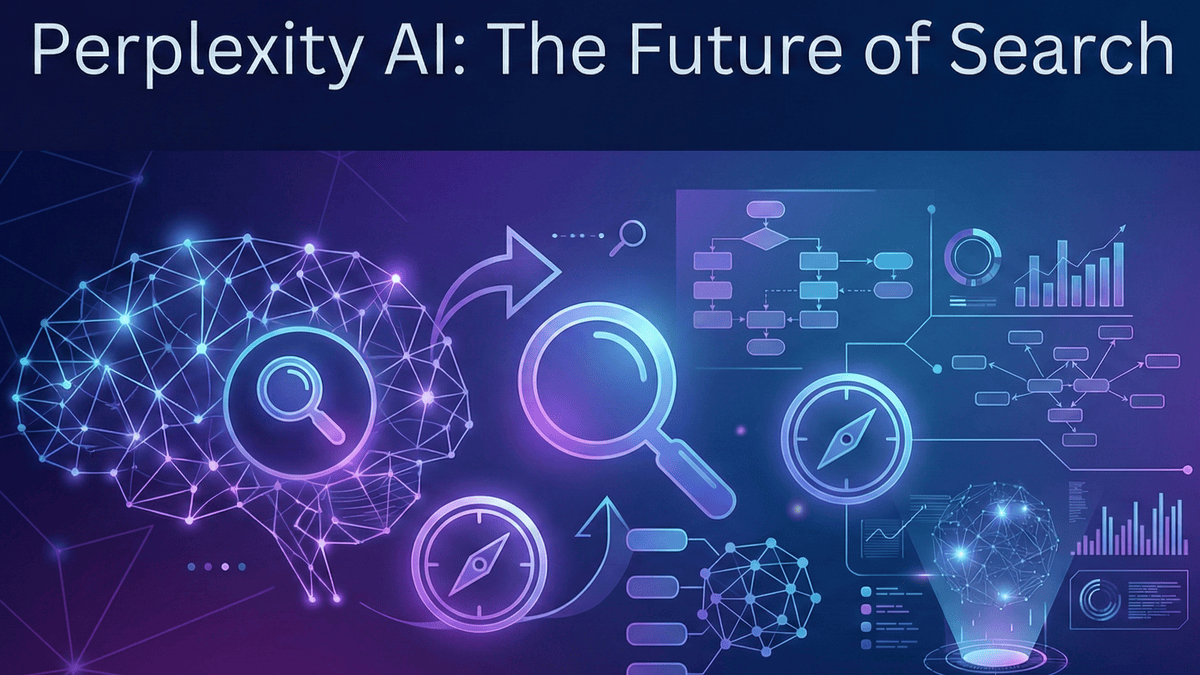
Perplexity is designed primarily as an answer engine. It focuses on real-time information retrieval and citation-based responses. Instead of long conversations, it emphasizes accuracy, transparency, and sources.
Official site:
https://www.perplexity.ai
Core Philosophy Differences
Although these tools appear similar on the surface, their underlying philosophies differ significantly.
Gemini is built around information synthesis at scale. ChatGPT is built around reasoning and language fluency. Perplexity is built around search replacement and verification.
Because of this, user expectations must be adjusted accordingly.
Writing and Content Creation
ChatGPT: Strongest Creative Writer
ChatGPT remains the strongest option for long-form writing. Blog posts, scripts, marketing copy, documentation, and storytelling are handled with fluency. Tone control is reliable. Iteration is smooth.
Content is generated with logical flow. Transitions feel natural. Style adaptation is consistent. Because of this, many writers use ChatGPT as a primary drafting tool.
Gemini: Context-Aware, but Conservative
Gemini performs well for informational writing, summaries, and structured explanations. However, creative flexibility is more limited. Output often feels safer and more neutral.
Its advantage appears when content is tied to Google Docs or Search context. In those cases, relevance is improved.
Perplexity: Informational Only
Perplexity is not optimized for creative writing. Its strength lies in answering questions with cited sources. Blog drafting is possible, but it often feels rigid and segmented.
Verdict for writing:
ChatGPT leads, Gemini follows, Perplexity trails.
Research and Fact-Checking
Perplexity: Best for Verifiable Answers
Perplexity excels in research scenarios. Responses are backed by visible sources. Links are provided clearly. This makes it ideal for journalists, analysts, and students.
Because citations are embedded by default, trust is easier to establish.
Gemini: Search-Native Intelligence
Gemini benefits from Google’s search infrastructure. When factual accuracy matters, it often surfaces relevant information efficiently. However, citations are not always presented as transparently as Perplexity.
ChatGPT: Reasoning Over Retrieval
ChatGPT can explain concepts deeply, but it is not primarily a live search tool. While accuracy is generally strong, real-time verification depends on configuration and model access.
Verdict for research:
Perplexity leads, Gemini follows, ChatGPT is best for synthesis rather than sourcing.
Productivity and Workflow Integration
Gemini: Deep Google Ecosystem Integration
Gemini’s biggest advantage is its integration with Google Workspace. Emails can be summarized. Documents can be rewritten. Sheets can be analyzed. With Calendar-aware suggestions.
For users already living inside Google products, Gemini feels like a natural extension.
ChatGPT: Flexible but External
ChatGPT integrates well with APIs, plugins, and third-party tools. However, it lives outside most productivity suites. Copy-paste workflows are still common.
For developers and power users, this flexibility is a benefit rather than a drawback.
Perplexity: Task-Focused, Not Workflow-Focused
Perplexity is not designed as a productivity hub. It answers questions. It does not manage workflows.
Verdict for productivity:
Gemini leads for Workspace users. ChatGPT leads for custom workflows.
Coding and Technical Assistance
ChatGPT: Best All-Around Coding Assistant
ChatGPT is widely used for debugging, code generation, refactoring, and explanation. Multi-language support is strong. Context handling is reliable.
Developers often use it as an on-demand technical collaborator.
Gemini: Improving, Especially for Google Stack
Gemini performs well for JavaScript, Python, and cloud-related tasks. It is particularly helpful when working with Google Cloud, Firebase, or web APIs.
Perplexity: Limited Coding Depth
Perplexity can answer technical questions but is not ideal for complex code generation or iterative debugging.
Verdict for developers:
ChatGPT leads clearly.
User Experience and Interface
ChatGPT offers a clean, conversation-centric interface. Gemini feels like an extension of Google Search and Workspace. Perplexity feels like a modern search engine.
Each experience aligns with the tool’s purpose. None is objectively better. Instead, preference depends on user intent.
Privacy, Data, and Trust
Because these tools are powered by large companies, privacy considerations matter.
Gemini operates within Google’s data ecosystem. ChatGPT operates under OpenAI’s policies. Perplexity emphasizes transparency through sources but still relies on external data pipelines.
Users handling sensitive information should review platform-specific policies carefully.
Feature Comparison Table (Website-Ready)
| Feature | Gemini | ChatGPT | Perplexity |
|---|---|---|---|
| Writing Quality | Good | Excellent | Basic |
| Research Accuracy | Good | Moderate | Excellent |
| Citations | Limited | Limited | Strong |
| Coding Help | Good | Excellent | Limited |
| Productivity Tools | Excellent | Moderate | Low |
| Ecosystem Integration | API-driven | Standalone | |
| Best Use Case | Workspace users | Creators & devs | Researchers |
Which Tool Should You Choose?
There is no single winner.
Gemini:
- Live inside Google Workspace
- Need AI assistance embedded in daily tools
- Value search-connected answers
ChatGPT:
- Write frequently
- Build products or code
- Need deep reasoning and iteration
Perplexity:
- Research often
- Need citations
- Care about factual verification
Many professionals use more than one tool, depending on the task.
The Bigger Trend
What matters most is not which tool “wins,” but what this comparison signals. AI is fragmenting into specialized intelligence layers. The future is not one assistant, but many—each optimized for a specific role.
For builders, creators, and product teams, this means one thing:
AI should be embedded into workflows, not treated as a novelty.






Leave a Reply